

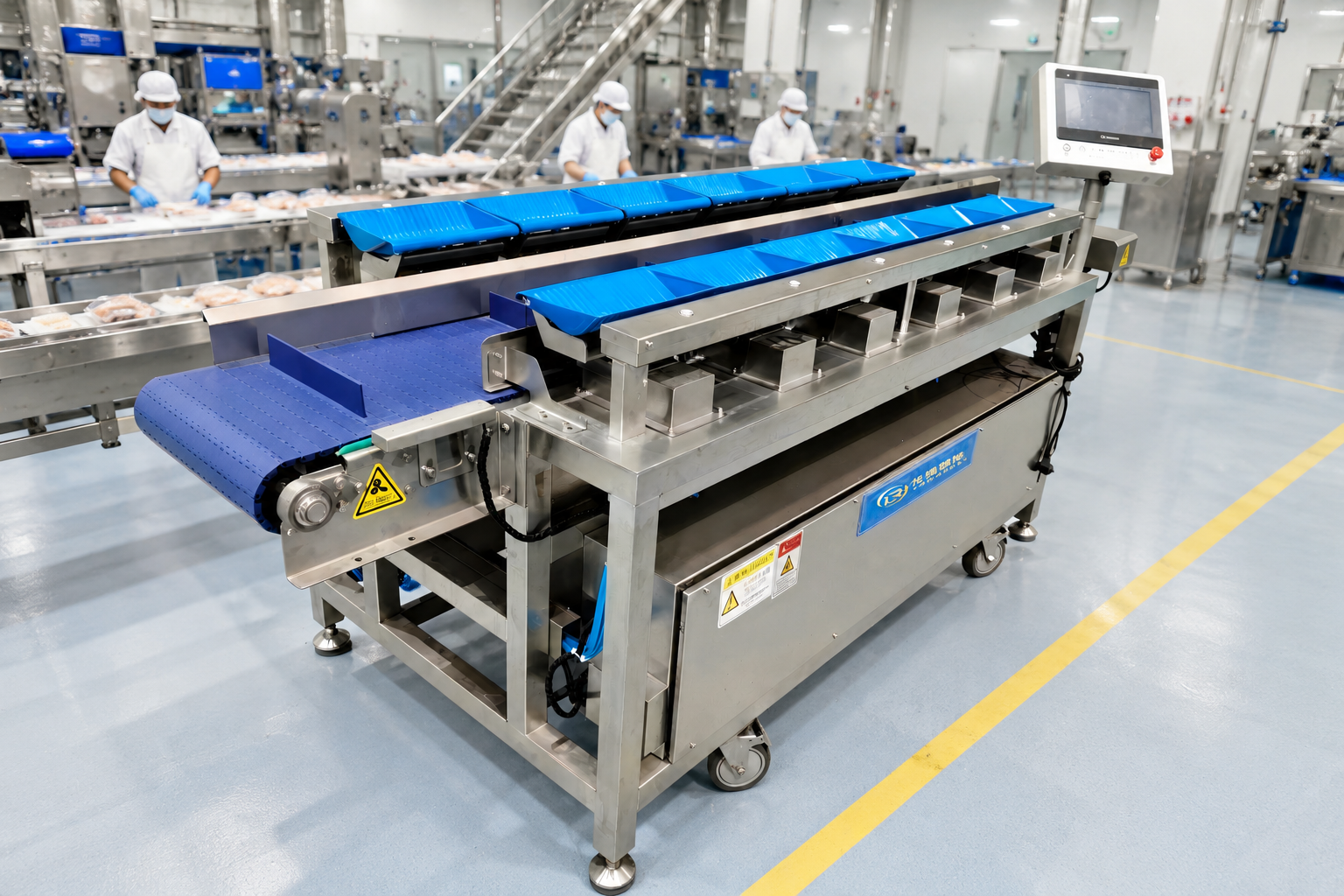
When choosing a multihead weigher for a food processing and packaging line, one of the most important decisions is selecting the right number of weighing heads.
Common configurations include 12-head, 16-head, 20-head, and 26-head multihead weighers. The number of weighing heads affects weighing accuracy, production speed, combination flexibility, and overall equipment performance.
However, more weighing heads do not always mean a better solution. The right automatic weighing machine depends on your product characteristics, target weight, production capacity, and automation requirements.
This article explains the differences between different multihead weigher configurations and helps food manufacturers choose the right combination weighing system for their production needs.
What Does the Number of Heads Mean in a Multihead Weigher?
A multihead weigher, also known as a bucket type multihead weigher or combination weigher, uses multiple weighing hoppers and an intelligent control system to achieve accurate target weights.
The number of heads refers to the number of independent weighing units installed in the machine.
For example:
- A 12-head multihead weigher has 12 independent weighing units.
- A 16-head multihead weigher has 16 independent weighing units.
- A 20-head multihead weigher has 20 independent weighing units.
- A 26-head multihead weigher has 26 independent weighing units.
More weighing heads provide more possible combinations, which can improve weighing flexibility and help achieve better accuracy for different food products.
12-Head Multihead Weigher
A 12-head multihead weigher is suitable for standard food weighing applications that require stable performance and cost-effective automation.
It is commonly used for:
- Frozen food
- Vegetables
- Snacks
- Granular products
- Medium-speed packaging lines
Advantages:
- Good weighing accuracy
- Stable operation
- Cost-effective investment
- Suitable for standard production requirements
For companies starting automatic weighing production or with medium output requirements, a 12-head model can provide a practical solution.
16-Head Multihead Weigher
A 16-head multihead weigher is one of the most widely used configurations in food processing industries.
With more weighing combinations compared with a 12-head model, it provides better flexibility and higher production efficiency.
Suitable applications include:
- Seafood processing
- Frozen food
- Meat products
- Fruit processing
- Automatic packaging lines
Advantages:
- Improved weighing accuracy
- Higher production speed
- More flexible product handling
- Suitable for various food applications
For many food factories, a 16-head multihead weigher provides a good balance between investment and performance.
20-Head Multihead Weigher
A 20-head multihead weigher is designed for higher production capacity and applications requiring more weighing combinations.
The additional weighing units allow the combination weighing system to calculate more possible weight combinations, helping improve accuracy and reduce product giveaway.
Suitable applications:
- High-speed food packaging
- Large production capacity
- Products requiring stable portion control
Advantages:
- More combination possibilities
- Higher weighing flexibility
- Suitable for continuous industrial production
For manufacturers requiring higher output, a 20-head model can provide improved production efficiency.
26-Head Multihead Weigher
A 26-head multihead weigher is designed for high-speed and demanding food processing applications.
With more weighing units, it provides maximum combination flexibility and is suitable for large-scale production lines.
Common applications include:
- Fruit processing
- Seafood production
- Frozen food packaging
- High-volume food factories
Advantages:
- Excellent weighing flexibility
- Higher production efficiency
- Suitable for complex products
- Designed for high-speed weighing applications
For large food manufacturers, a 26-head multihead weigher can help achieve higher automation levels and stable production performance.
12 Head vs 16 Head vs 20 Head vs 26 Head Multihead Weigher Comparison
| Model | Suitable Applications | Main Advantages |
|---|---|---|
| 12-head | Standard food weighing | Stable and cost-effective |
| 16-head | Medium and high-speed production | Balanced performance and flexibility |
| 20-head | Higher capacity production | More weighing combinations |
| 26-head | High-speed industrial production | Maximum flexibility and efficiency |
How to Choose the Right Multihead Weigher?
When selecting a multihead weighing system, consider the following factors:
1. Product Characteristics
Different products require different weighing solutions.
For example:
- Seafood products may require waterproof design and easy cleaning.
- Frozen food may require suitable feeding systems.
- Fruit products may require gentle handling.
- Meat products require hygienic construction.
Understanding your product characteristics is the first step in choosing the right weighing equipment.
2. Target Weight
The target package weight affects the suitable weighing configuration.
Small retail packages and larger portion packages may require different weighing combinations and hopper sizes.
3. Required Production Speed
Production capacity is an important factor.
A higher head configuration generally provides more weighing combinations, making it suitable for high-speed weighing machine applications.
The multihead weigher should also match other equipment, including:
- Packaging machines
- Conveyor systems
- Checkweighers
- Metal detectors
to achieve efficient automatic production.
4. Product Value and Weighing Accuracy
For high-value products such as seafood, premium fruit, and meat, improving weighing accuracy can directly reduce product giveaway and increase profitability.
Choosing the right multihead weigher configuration helps maintain stable portion control during continuous production.
5. Future Production Requirements
Companies should consider future capacity expansion when selecting equipment.
Choosing a suitable configuration can avoid replacing equipment when production requirements increase.
Why Choose Longreat Multihead Weighing Solutions?
Longreat Automation Equipment provides automatic weighing solutions and complete food processing automation systems.
Our multihead weighing systems are designed for food manufacturers requiring accurate weighing, high efficiency, and reliable performance.
Our solutions include different configurations of multihead weighers for:
- Seafood processing
- Poultry and meat processing
- Frozen food production
- Fruit processing
- Food packaging lines
We provide customized recommendations based on:
- Product characteristics
- Target weight
- Production speed
- Factory layout
- Automation requirements
Final Thoughts
There is no single best multihead weigher configuration for every application.
A 12-head model may be suitable for standard production, while 16-head, 20-head, and 26-head models provide higher flexibility and capacity for more demanding applications.
The right choice depends on your product, weighing accuracy requirements, production speed, and future automation goals.
Choosing the correct combination weigher can help food manufacturers improve efficiency, reduce product giveaway, and build a more reliable automatic weighing and packaging system.
Longreat Automation Equipment – Your Trusted Partner for Complete Food Processing Automation & Hygienic Solutions.